What is happening with code reviews?
Duckbill, 15 people, stopped human review on low-risk PRs and weekly merges went from 80 to 154. Gergely Orosz on the ways teams now triage review by blast radius.
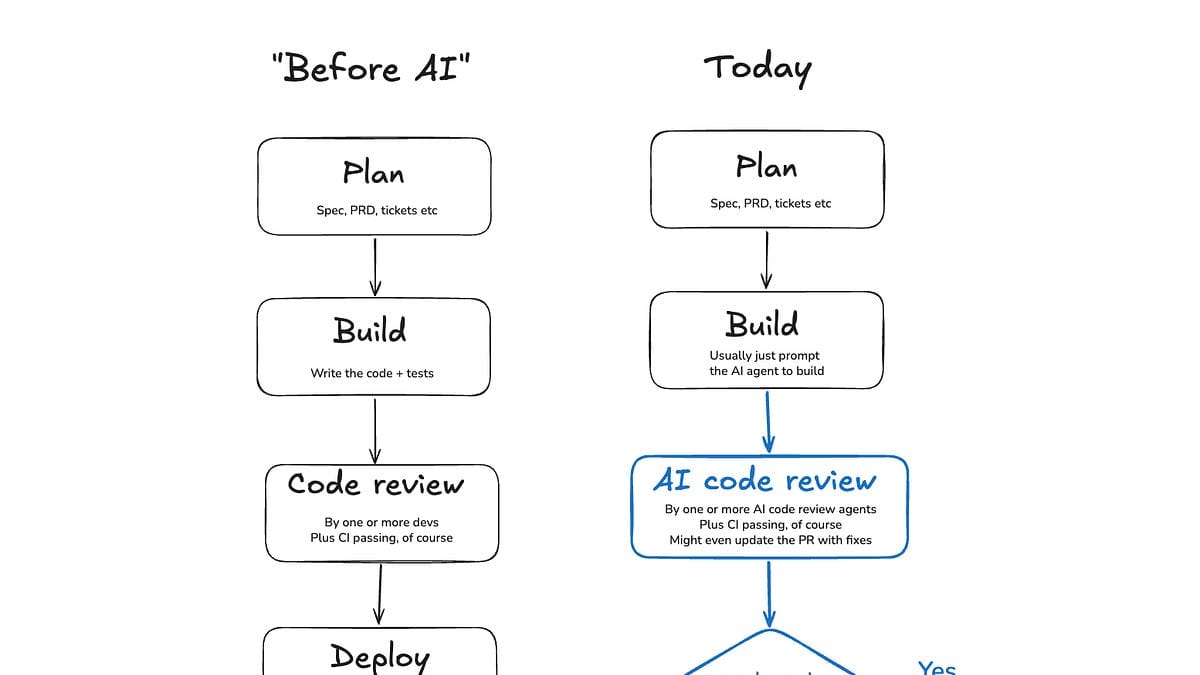
At Duckbill, a fifteen-person startup that found itself with 60 open PRs, a shell script now sorts changes by risk: low-risk ones merge without a human, high-impact ones still get a reviewer. Weekly merges went from 80 to 154 and the share merged within an hour from 28% to 45%; human-reviewed PRs still take a median 26 hours against 1 hour for the rest. Gergely Orosz sets this beside two other patterns: humans reviewing the AI reviewer's comments instead of the diff, and reviewing the plan, tests and schema instead of the implementation. If review is your bottleneck, blast-radius triage is the one to try first; Duckbill paired it with stricter tests, linting and type checks.
Comments
Loading comments…