Rollback Does Not Erase Distributed Memory
Slack's DNSSEC rollback left some resolvers holding a cached DS record for up to 24 hours. Why reverting the code is not the same as recovering, and when to roll forward.
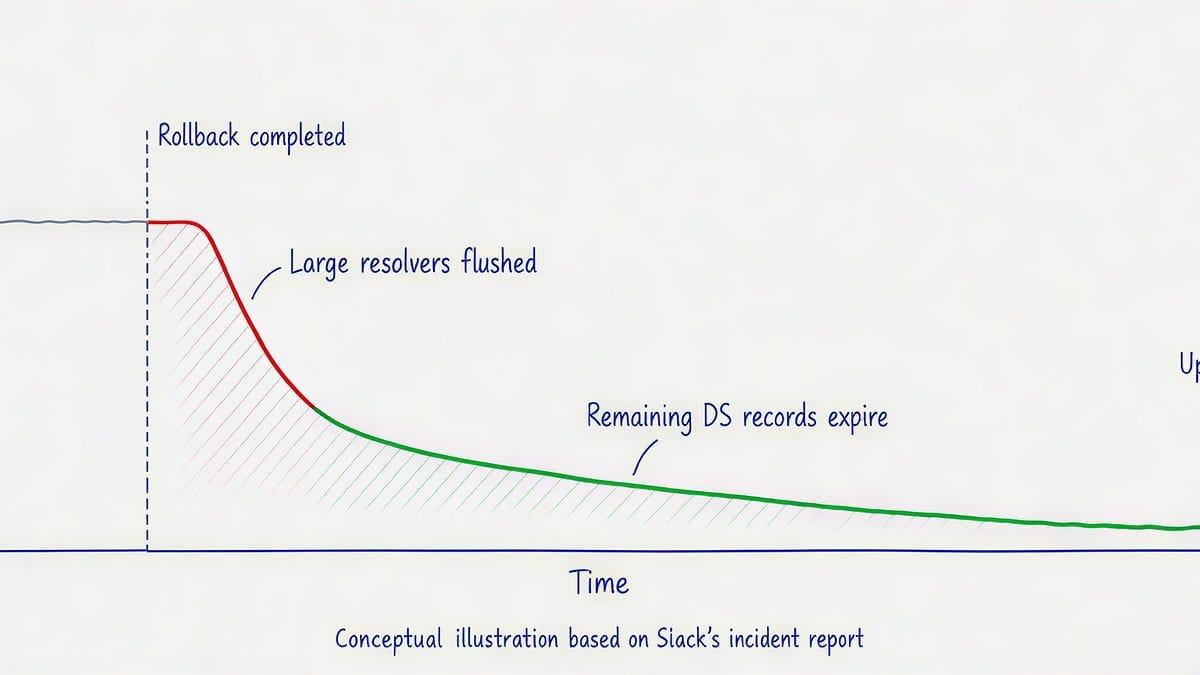
Rolling back the source of truth does not roll back the caches, databases and queues that already took in the bad version. The essay uses two public incidents: Slack pulled its DS record during a DNSSEC rollback, but resolvers that had cached it for up to 24 hours kept failing validation until providers flushed or the records expired; CircleCI's November 2021 rollback left the old code unable to read jobs the new one had written, and recovery took a compatibility build and a queue drain. The author splits recovery into three stages, config reverted, components applied, state repaired, and argues teams check the first and assume the third. Before your next rollback drill, list what the new version writes that the old one cannot read.
Comments
Loading comments…